
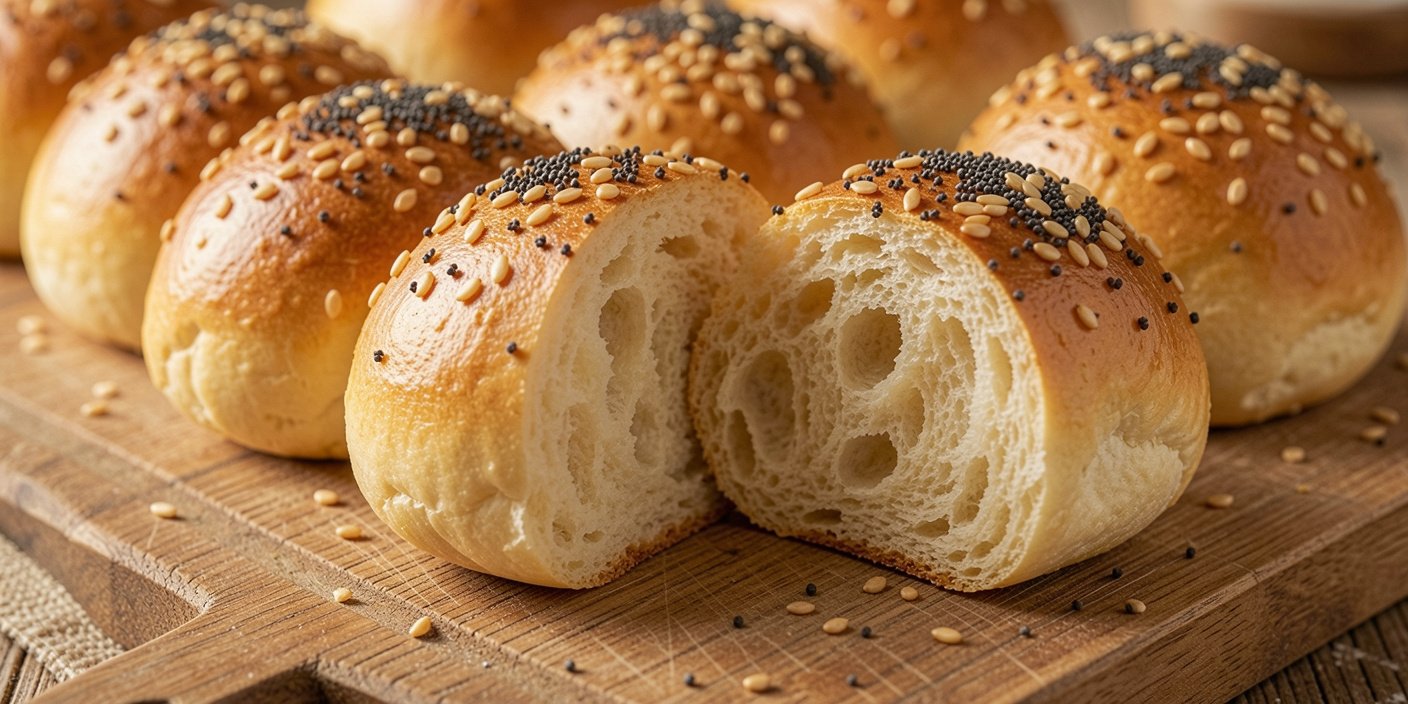
These Bread Rolls Use Just 3 Ingredients and Skip the Egg Wash Entirely
Most quick bread roll recipes still ask for one more ingredient at the end — an egg wash to get that shiny, golden top. These 3-ingredient bread rolls skip it entirely: self-rising flour, plain yogurt, and salt come together into a dough with about 5 minutes of hands-on prep, and the tops get a simple brush of water and a scatter of seeds instead of egg. No yeast, no proofing time, no extra ingredient to keep on hand.
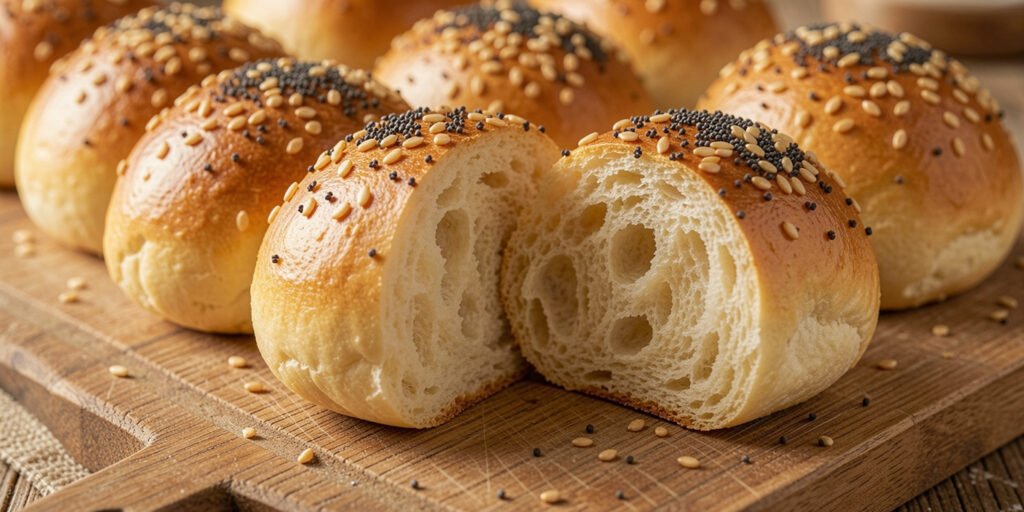
They’re just as soft and golden as the egg-washed version, and the recipe works for anyone avoiding egg for allergy or preference reasons.
Why This Works Without Yeast
Traditional bread rolls rely on yeast, which needs time to activate and proof before the dough can be shaped and baked — often an hour or more. This recipe swaps that out for self-rising flour, which already has baking powder and salt mixed in. The baking powder reacts as soon as it hits moisture and heat, giving the rolls their rise chemically instead of through yeast fermentation. That’s what makes the whole process fast: mix, shape, bake, no waiting required.
The yogurt does double duty — it provides the moisture the dough needs, and its slight acidity helps activate the baking powder a little further, giving the rolls a soft, tender crumb rather than a dense one.
Can you make bread rolls without yeast? Yes. Self-rising flour combined with yogurt and a pinch of salt creates a dough that rises from baking powder rather than yeast, ready to bake with no proofing time. Brush the tops with water (or an egg wash, if preferred) before adding seeds, and bake until golden.
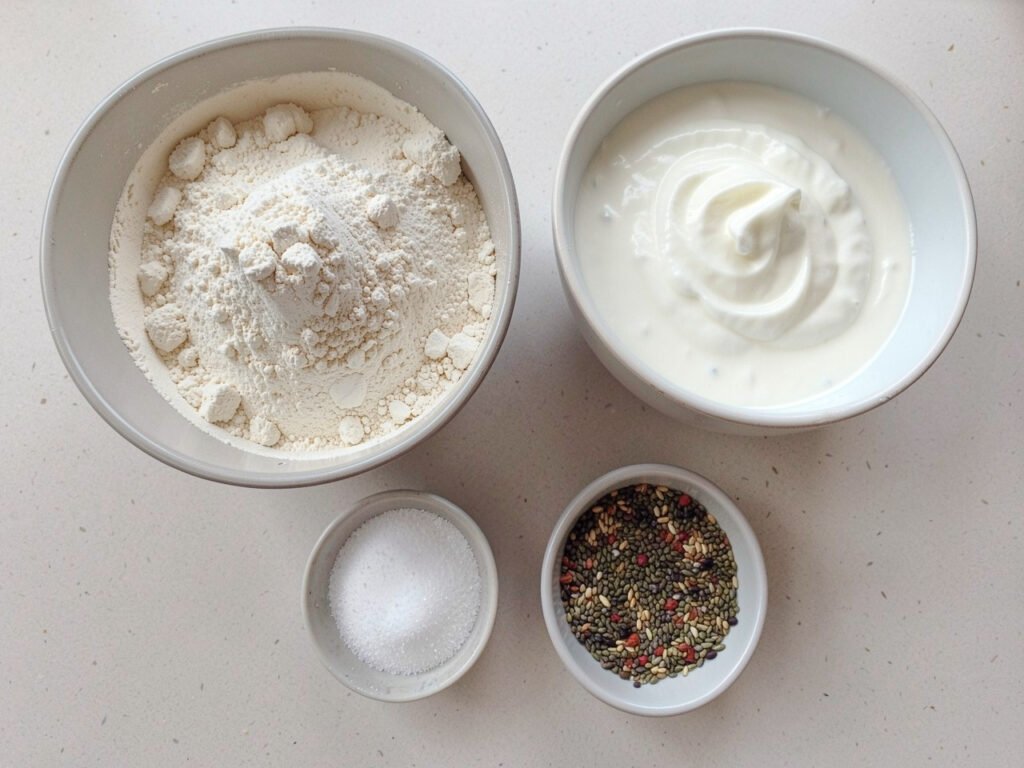
Ingredients (Makes 6–8 Rolls)
- 250g (2 cups) self-rising flour (or all-purpose flour + 3 tsp baking powder + ½ tsp salt)
- 250g (1 cup) plain yogurt
- Pinch of salt (plus any additional spices you like — garlic powder, dried herbs, etc.)
- Water, for brushing
- Sesame seeds, poppy seeds, or other seeds/grains, for topping
Ingredient notes: If your self-rising flour already contains salt, you can skip the extra pinch, though a little more helps bring out flavor in a dough this simple. Thicker yogurt (Greek-style) generally gives a slightly firmer dough than thinner, regular yogurt — either works, but you may need to adjust the flour slightly if your dough feels too wet or too dry. Adding a pinch of your favorite spices directly to the dough (garlic powder, Italian herbs, chili flakes) is an easy way to flavor the rolls without adding a separate ingredient.
Step-by-Step Instructions
- Mix the dough. In a large bowl, combine the self-rising flour, yogurt, and a pinch of salt (plus any spices you’re using). Stir until a shaggy dough forms, then bring it together with your hands into a rough ball.
- Knead briefly. Turn the dough out onto a lightly floured surface and knead for about a minute, just until it comes together smoothly. Don’t overwork it.
- Shape the rolls. Divide the dough into 6–8 equal pieces and shape each into a ball. Place on a parchment-lined baking sheet, spaced apart.
- Brush and top. Lightly brush the top of each roll with water, then sprinkle with sesame seeds, poppy seeds, or your preferred topping.
- Bake. Bake at 160°C (320°F) conventional (top/bottom heat) for about 40 minutes, until golden brown on top. Check doneness by tapping the bottom of a roll — it should sound hollow.
- Cool slightly before serving. Let the rolls cool for a few minutes on a wire rack before serving warm.
Getting the Texture Right
- Don’t overmix. A quick knead just until the dough comes together is enough — overworking it can make the rolls denser than they need to be.
- Adjust for your yogurt. If the dough feels too sticky, add a little more flour a spoonful at a time; if it’s too dry and crumbly, add a small splash more yogurt or a little water.
- Water brush vs. egg wash. A water brush gives a lighter, more matte finish, while an egg wash gives more shine and a deeper golden color — either works, so use whichever you have on hand.
- Check by sound, not just color. A fully baked roll should sound hollow when tapped on the bottom; if it sounds dense or dull, give it a few more minutes.
Serving Ideas
These rolls work well alongside soup, stew, or a simple pasta dish, or split and filled for a quick sandwich. Warm, with a bit of butter or honey, they also work as a simple snack on their own.
Storage
Store in an airtight container at room temperature for up to 2 days, or freeze for up to 3 months. Reheat briefly in a warm oven to bring back the fresh-baked texture before serving.
Easy Variations
- Cheesy rolls: Mix shredded cheddar or parmesan into the dough before shaping.
- Garlic herb rolls: Add garlic powder and dried Italian herbs to the dough for a savory twist.
- Sweet version: Add a spoonful of honey or a pinch of cinnamon to the dough for a milder, slightly sweet roll.
- Different toppings: Try everything bagel seasoning, oats, or flaky salt in place of sesame or poppy seeds.
- Mini rolls: Divide the dough into 10–12 smaller pieces for bite-sized rolls, and reduce the bake time by several minutes.
Key Takeaways
- These rolls use self-rising flour and yogurt for a chemical rise, skipping yeast and proofing time entirely.
- A water brush replaces the usual egg wash, keeping the ingredient list to three and making the recipe egg-free.
- Bake at 160°C (320°F) for about 40 minutes, checking for a hollow sound when tapped.
- Add salt and spices directly to the dough for extra flavor without extra ingredients.
- Store at room temperature for a couple of days, or freeze for longer storage.
FAQ
Can you make bread rolls without yeast?
Yes. Self-rising flour combined with yogurt and a pinch of salt creates a dough that rises from baking powder rather than yeast, with no proofing time required.
What’s the difference between using regular yogurt and Greek yogurt?
Greek yogurt is thicker and higher in protein, which can make for a slightly firmer dough, while regular yogurt is thinner and gives a softer dough. Both work, but you may need to adjust the flour amount slightly depending on which you use.
Why didn’t my rolls rise?
This is usually due to expired baking powder in older self-rising flour, or an oven that wasn’t fully preheated before baking. Check the date on your flour and make sure the oven is at temperature before the rolls go in.
Can I use an egg wash instead of water?
Yes. An egg wash gives a shinier, deeper golden finish, while a water brush gives a lighter, more matte look. Either works — use whichever you have on hand or prefer.
Can I make the dough ahead of time?
It’s best baked shortly after mixing, since the baking powder starts reacting as soon as it’s combined with the yogurt. If you need to prep ahead, the dry and wet ingredients can be measured out separately in advance and combined just before baking.
How do I store leftover rolls?
Store in an airtight container at room temperature for up to 2 days, or freeze for up to 3 months. Reheat briefly in a warm oven before serving.